
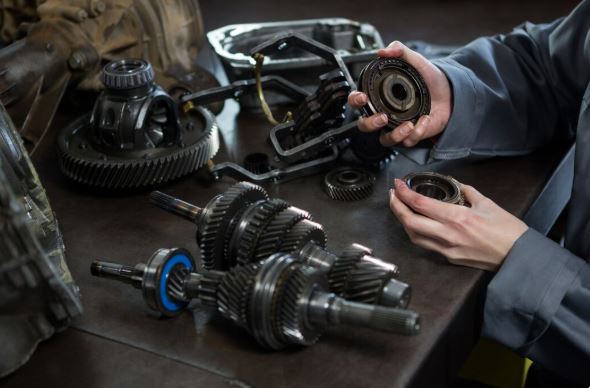
Steel is the most widely used engineered metal on the planet. Its value comes from how precisely its properties can be tuned. Small changes in carbon content, alloying elements, forming method and heat treatment can turn the same base metal into a spring that survives millions of cycles, a casting that absorbs intense heat, or a forging that carries enormous rotating loads. That versatility is why steel and cast iron have dominated heavy-duty mechanical applications for more than a century.
One of the most demanding tests of that versatility is the automotive aftermarket. There, replacement components must match the metallurgy and tolerances of the original parts to perform safely. This article covers four areas:
- the ferrous grades used in engine and brake components
- the manufacturing processes that define their performance
- the quality checks that separate a reliable replacement from an early failure
- how distribution, including local supply, affects lead times and material recovery
1. Ferrous Materials in Critical Components
Different components face very different mechanical, thermal and corrosive loads, so a wide range of ferrous grades is used.
Engine rotating assemblies
- Crankshafts are made from forged carbon or alloy steels such as SAE 1045 and 4140, microalloyed forging steels such as 38MnVS6, or high-strength ductile iron. Their most important properties are fatigue strength and journal hardness.
- Connecting rods are forged or powder-forged steel, chosen for resistance to high cyclic loads.
Valvetrain
- Exhaust valves use austenitic heat-resistant steels such as 21-4N, which keep their strength and resist oxidation at high exhaust temperatures.
- Intake valves typically use martensitic valve steels, which balance wear resistance with the more moderate temperatures on the intake side.
- Valve springs are chrome-silicon spring steels such as SAE 9254, selected for fatigue life and resistance to relaxation.
Braking systems
- Brake rotors are grey cast iron, commonly to SAE J431 G3000, with high-carbon variants used where extra damping is needed. The graphite flakes in grey iron conduct heat well and dampen vibration. That combination is essential for controlling brake fade and noise.
- Calipers are ductile cast iron or aluminium, with steel pistons and hardware built to stay stiff under clamping load.
- Pad backing plates are fine-blanked or stamped low-carbon steel, where flatness and dimensional stability are critical.
Chassis and exhaust
- Control arms and brackets are stamped or forged carbon and HSLA steels, balancing strength against weight.
- Exhaust systems increasingly use ferritic stainless grades such as 409 and 439 to resist corrosion from road salt and acidic condensate.
2. Manufacturing Processes That Define Performance
Material grade alone does not decide how a part performs. Processing history matters just as much.
- Forging. Crankshafts and connecting rods are hot-forged so the grain flow follows the shape of the part. This gives better fatigue resistance than machining from bar stock.
- Casting. Rotors and calipers are sand-cast. Cooling rate, carbon equivalent and inoculation practice control graphite shape and hardness. Poor control can lead to porosity, hard spots and uneven thermal behaviour.
- Stamping and fine blanking. Brackets, backing plates and control arms are formed from sheet or plate. Die wear and springback control determine the final geometry.
- Heat treatment. Crankshaft journals are commonly induction-hardened or nitrided. Valve springs are shot-peened to add compressive residual stress at the surface. Many forged parts are quenched and tempered to reach their target strength.
- Surface protection. Anti-corrosion coatings on rotors and hardware extend service life, especially where road salt is heavily used.
Because these variables differ between suppliers, production runs and model years, two parts with the same outline can behave very differently in service.
3. Quality Verification in Aftermarket Replacement
Original equipment plants check components using coordinate measurement, hardness testing and surface finish analysis. In the aftermarket, much of that checking moves to the point of sale and the technician’s bench.
- Brake rotors: Check nominal and minimum thickness, thickness variation, lateral runout (often held to hundredths of a millimetre), vane design and hub bore diameter.
- Pads and hardware: Check backing plate profile, abutment clip geometry and spring clip tension. Spring steel clips lose preload with heat cycling and should be replaced along with the pads.
- Engine components: Check the part number cross-reference, the dimensional match of mounting points and the correct fastener grade.
- Fasteners and joints: Check correct torque and thread condition. Use anti-seize compound where steel fasteners thread into aluminium, to prevent galvanic corrosion and seizing.
Online catalogues work from part numbers and photographs. They often cannot show trim-level differences in casting thickness, bracket stamping or sensor mounting. Comparing a new part side by side with the removed original is still one of the most effective checks available outside a factory.
4. Distribution and Lead Time
Ferrous components are dense and heavy. Rotors, calipers and engine assemblies usually ship by ground freight, which commonly means 5 to 7 business days for online orders. A wrong-fit return adds another full shipping cycle before the correct part arrives.
Local distribution shortens this considerably. Parts are available the same day. The replacement can be compared physically with the original before purchase. A wrong fit can be exchanged on the spot instead of shipped back. Consumables such as hardware kits, crush washers and brake cleaner can be picked up in the same visit instead of on a second order. For fleet operators, trades vehicles and home mechanics, that reduction in downtime often outweighs any unit price difference.
5. Core Returns, Remanufacturing and Circular Steel
Core charges on starters, alternators, calipers and batteries link each repair to the wider metals recovery chain. Returned cores are either remanufactured, meaning they are cleaned, inspected, re-machined and rebuilt, or sent on as scrap. Scrap steel and iron are key feedstock for electric arc furnace (EAF) steelmaking, which relies heavily on recycled material.
Returning cores locally has two advantages:
- The customer gets an immediate refund at the counter instead of waiting weeks for a mail-in return.
- Cores move into regional remanufacturing and scrap channels faster, with less transport per part recovered.
As steel producers put more weight on recycled content and lower-emission production, efficient core recovery in the aftermarket is a small but real part of a circular steel economy.
Conclusion
The performance of an engine or braking system depends on the metallurgy and manufacturing precision of each steel and iron component. Replacing those components well means matching material grade, heat treatment and geometry, not just general appearance. Local supply adds physical verification, same-day availability and efficient core recovery to that process.
For drivers and home mechanics looking for a reliable auto parts store in Newmarket for engine, brake, and car parts, Jiffy.parts offers same-day availability, hands-on fitment checks and knowledgeable technical support.