
Steel plants operate at some of the most extreme industrial conditions in modern manufacturing. From blast furnaces and electric arc furnaces to reheating and continuous casting zones, temperatures routinely exceed hundreds or even thousands of degrees Celsius, while exposure to dust, slag, corrosive gases, and mechanical vibration remains constant. In these environments, material performance is not a secondary consideration—it is a determining factor for safety, reliability, and operational continuity.
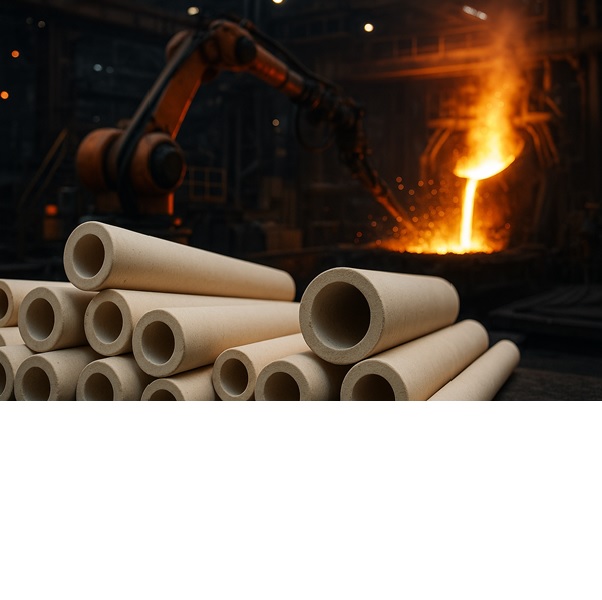
In furnace-adjacent zones where thermal shock, electrical interference, and chemical attack converge, material selection becomes a critical engineering challenge. Components such as advanced alumina-based tubular insulation are often referenced in engineering discussions for their ability to maintain structural integrity, thermal stability, and electrical insulation under extreme steelmaking conditions.
Understanding High-Temperature Zones in Steel Plants
High-temperature zones in steel plants include areas immediately surrounding furnaces, ladles, reheating systems, and exhaust pathways. These locations experience rapid temperature fluctuations, intense radiant heat, and continuous exposure to aggressive atmospheres containing metal oxides, sulfur compounds, and fine particulate matter.
Unlike conventional industrial environments, materials used in these zones must withstand not only sustained heat but also repeated thermal cycling. Sudden temperature changes during tapping, charging, or maintenance operations can introduce thermal stress that accelerates cracking, deformation, or insulation failure if materials are inadequately specified.
Thermal Stress and Material Degradation
Thermal stress is one of the most persistent causes of material failure in steel plants. Metals expand and contract under heat, often leading to fatigue, warping, or loosening of assemblies over time. Organic insulation materials may degrade, char, or release contaminants when exposed to sustained high temperatures.
Ceramic-based materials are frequently evaluated for these applications due to their low thermal expansion coefficients and inherent resistance to heat-induced deformation. When properly engineered, they can provide long-term dimensional stability even under continuous exposure to furnace-level temperatures.
Material Performance Comparison in High-Temperature Steel Zones
The following table summarizes how commonly used material categories perform under the combined thermal, electrical, and chemical stresses typically found in steel plant high-temperature areas.
| Performance Factor | Metallic Components | Polymer-Based Insulators | Advanced Ceramic Materials |
| Maximum Operating Temperature | High, but prone to oxidation | Limited by thermal degradation | Excellent, stable at elevated temperatures |
| Thermal Shock Resistance | Moderate | Low | High |
| Electrical Insulation | Poor | Good at low temperatures | Excellent and stable |
| Chemical Resistance | Moderate | Low to moderate | High resistance to corrosive gases |
| Dimensional Stability | Affected by expansion | Degrades over time | Maintains precision |
| Typical Service Life in Steel Plants | Medium | Short | Long |
This comparison highlights why ceramics are increasingly considered in applications where combined heat, electrical isolation, and chemical resistance are required.
Electrical Isolation in Harsh Steelmaking Environments
Beyond thermal resistance, electrical insulation plays a critical role in modern steel plants. High-power equipment, automated control systems, and sensor networks operate in close proximity to conductive steel structures and molten metal. Inadequate electrical isolation can result in signal interference, measurement inaccuracies, or safety risks for personnel.
Materials used near high-temperature electrical systems must retain insulating properties without becoming brittle or conductive over time. This requirement significantly narrows viable material choices in furnace-adjacent zones.
Chemical Resistance and Environmental Exposure
Steelmaking environments are chemically aggressive. Off-gases, scale, slag, and process by-products introduce corrosive elements that can attack many conventional materials. Even minor chemical degradation can compromise insulation performance or lead to premature failure.
Materials with inherent chemical inertness are therefore favored in these locations, particularly where long service life and low maintenance are operational priorities.
Mechanical Stability and Installation Considerations
While thermal and chemical properties are essential, mechanical stability cannot be overlooked. Components installed near furnaces and high-temperature systems are subjected to vibration, mechanical shock, and structural loading. Materials must maintain strength without becoming excessively brittle.
Engineering teams increasingly prefer solutions that balance durability with ease of installation, allowing for predictable maintenance cycles and reduced downtime.
The Role of Materials in Steel Plant Safety and Efficiency
Material failures in high-temperature zones can have cascading effects—ranging from unplanned shutdowns to safety incidents. As steel plants pursue higher levels of automation, energy efficiency, and process optimization, the reliability of materials used in extreme environments becomes even more critical.
Selecting materials based on a holistic understanding of thermal, electrical, chemical, and mechanical demands allows steel producers to reduce maintenance cycles, extend equipment life, and support safer working conditions.
Looking Ahead: Evolving Material Demands in Steel Manufacturing
As steelmaking technologies evolve, so do the demands placed on materials. Higher operating temperatures, tighter process controls, and increased integration of digital monitoring systems will continue to raise performance expectations.
Future steel plants are likely to rely on advanced materials that combine thermal resilience with electrical insulation and chemical stability, enabling consistent operation in increasingly demanding environments.
Conclusion
High-temperature zones remain one of the most challenging aspects of steel plant design and operation. Successfully managing thermal stress, electrical isolation, chemical exposure, and mechanical stability requires careful material selection grounded in engineering principles.
By addressing these material challenges proactively, steel manufacturers can enhance operational reliability, improve safety, and support long-term efficiency goals—ensuring that the most demanding areas of the plant perform as consistently as the rest of the production line.