
Packaging decisions made at the design stage have a direct and measurable effect on what happens at the warehouse dock. When a box is even slightly too wide, too tall, or irregularly shaped, it disrupts the entire pallet configuration, wasting vertical space, creating instability, and inflating transportation costs before a single shipment leaves the facility.
The variables that drive packaging optimization come down to a handful of design factors: footprint fit relative to pallet dimensions, uniform box sizing, compressive strength, and stackability. When these elements align, load stability improves, more units fit per pallet, and space utilization increases without adding complexity to the operation.
Those gains compound quickly across the supply chain. Better stacking efficiency means fewer pallets per shipment, which reduces freight spend and lowers the risk of product damage in transit, making pallet design a foundational consideration in broader supply chain efficiency.
Fit the Box to the Pallet, Not Just the Product
Right-sizing a carton around the product is only half the work. If those dimensions do not align with the pallet beneath them, the efficiency gains disappear quickly. Some operations standardize around wooden pallets, while others choose to shop at Pallets & Bins for plastic pallet options when sanitation, durability, or repeat-use goals affect packaging decisions. Either way, the pallet format is only one variable; carton dimensions have to work with it.
Why the 48×40 Footprint Changes Packaging Choices
The GMA pallet measures 48 by 40 inches, and that footprint shapes every packaging decision that follows. When carton dimensions tessellate cleanly across that surface, each layer locks together without gaps. When they do not, the result is either overhang, where boxes extend past the pallet edge and create instability, or underhang, where empty voids form between cartons and squander usable cube. Both outcomes reduce load optimization and increase the chance of product shifts during forklift handling.
How Dimension Consistency Improves Layer Patterns
Consistent carton dimensions allow warehouse teams to repeat the same layer pattern across every pallet build. That repeatability directly improves space utilization and reduces the manual adjustments that slow down staging. Teams focused on maximizing space while cutting waste consistently treat dimension planning as part of the pallet decision, not an afterthought.
Strength Decides How High and How Safely You Stack
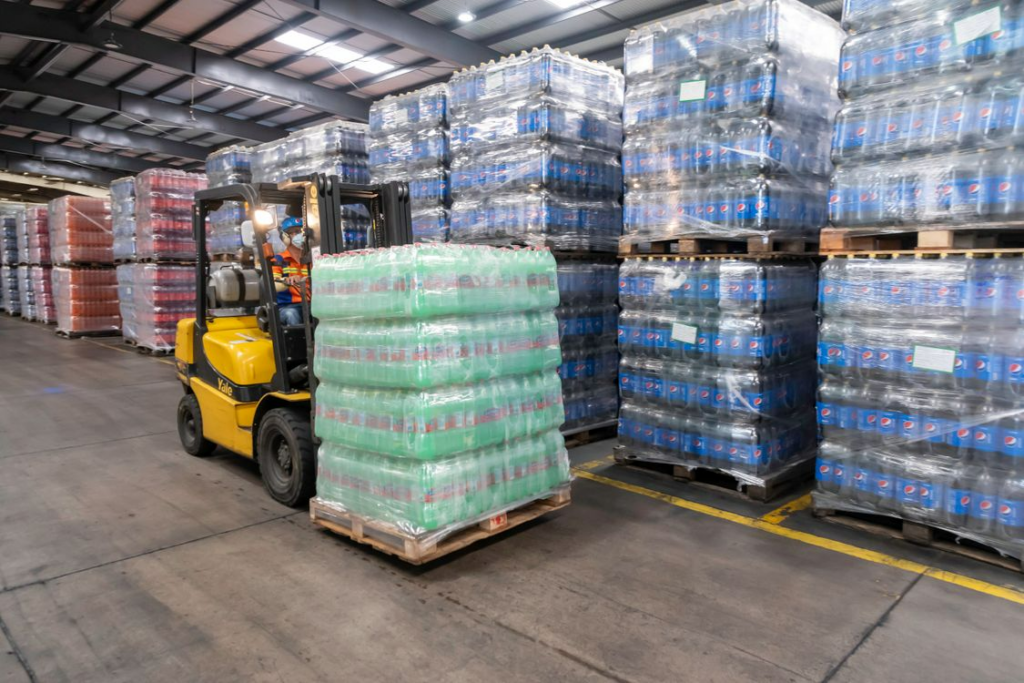
Getting the footprint right is necessary, but it is not sufficient on its own. The material strength of each carton determines how far that well-fitted configuration can actually go.
What Crush Strength Means for Pallet Loads
A box that fits the pallet perfectly can still fail if the material cannot bear the weight stacked above it. Corrugated packaging strength sets the ceiling for safe stacking height, and that ceiling has direct consequences for load stability and product damage rates during transit.
Edge crush and box compression values are the practical inputs designers use to determine how many layers a configuration can safely support. Research confirms that these mechanical properties are reliable predictors of real-world performance under stacking conditions.
The tradeoff becomes clear when material is reduced to cut costs. Thinner corrugated packaging may lower unit spend, but it raises collapse risk under load, which quickly erodes stacking efficiency and increases product damage claims. Stronger load integrity means fewer incidents per shipment, fewer replacement orders, and tighter control over transportation costs across the supply chain.
Design for Scanning, Automation, and Clean Handling
Physical fit is only part of the equation. How packaging interacts with scanning systems, automated equipment, and handling workflows has an equally direct effect on overall supply chain efficiency.
Label placement and RFID tag positioning determine whether pallet-level visibility is maintained throughout the warehouse. When barcodes are obscured by overhang or inconsistently placed across cartons, rescans slow throughput and introduce errors that ripple forward in the operation.
Uniform packaging dimensions also matter for warehouse automation. Robotic palletizers and AGV systems are calibrated around predictable carton profiles. Irregular shapes or inconsistent sizes interrupt those systems, causing jams, rejected picks, and unplanned downtime that offset the gains driving surging global pallet demand. Stable, consistent cartons reduce handling friction at every touchpoint, keeping packaging optimization aligned with the speed and accuracy that modern logistics environments require.
When Sustainable Packaging Improves Pallet Output
Sustainable packaging contributes to pallet efficiency when the design preserves load stability rather than compromising it. Lightweighting reduces shipment weight and lowers transportation costs, but only when the reduction does not weaken compressive strength or introduce inconsistent dimensions that disrupt layer patterns.
Reusable packaging takes that logic further. Durable materials that withstand multiple handling cycles reduce packaging waste while maintaining the dimensional consistency that pallet configurations depend on. Repeat-use systems also reduce long-term material spend, making supply chain efficiency and sustainability goals easier to pursue together rather than in tension.
The Best Packaging Design Is Pallet Aware
Packaging and pallet planning work best when they are treated as a single system rather than separate decisions. The design choices that determine carton footprint, compressive strength, and dimensional consistency all feed directly into load optimization outcomes.
When evaluating any packaging change, the practical lens is straightforward: does the new design fit the pallet cleanly, hold under stacking conditions, and move through handling without disruption? Those three questions keep packaging optimization grounded in what actually drives pallet efficiency.